Streaming Guides
Why the same account behaves differently on a phone, a browser and a television
A streaming service is not one application but several, each constrained by the platform it runs on, and the differences in quality, features and reliability follow from those constraints rather than from inconsistency.
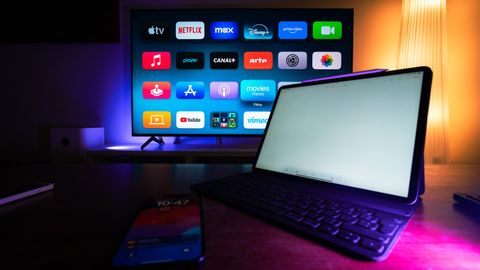
One service, many implementations
A streaming service has to be built separately for each family of devices it supports, because the platforms differ in how they handle video, input and networking. Those implementations share a back end and a catalogue but not much else, which is why a feature can appear on one device long before another. Television platforms in particular are numerous and slow to update, so a service may be maintaining several versions of different ages simultaneously.
The differences a viewer notices are therefore differences between separate pieces of software rather than settings that could be aligned. This is also why a problem on one device frequently disappears entirely on another without anything else changing.
Content protection is the biggest divider
Rights agreements require that high-quality streams are protected, and the protection has to be enforced by hardware rather than by the application. Devices vary in what hardware protection they support, and a device without the required level is served a lower quality stream regardless of its screen or connection. This is the usual explanation when a capable device consistently delivers a softer picture than a less impressive one sitting beside it.
It also explains why the same content can look markedly better through a dedicated application than through a browser on the same machine. None of this is adjustable by the viewer, since it is determined by what the device can attest to rather than by any preference.
Browsers are the most constrained environment
A browser runs streaming software inside a sandbox that limits its access to the underlying hardware, including the video decoding paths. Some browsers support only certain codecs, and a service will fall back to whatever is available rather than refusing to play. Protection support in browsers is generally lower than in dedicated applications, which caps the quality that can be offered.
The result is that browser playback is often the least impressive route to a service even on powerful hardware. Viewers comparing devices frequently conclude that a computer is underpowered when the actual constraint is the environment the stream is running in.
Networking differs by platform too
Mobile devices are built to handle changing connections and switch between networks without interrupting playback, which makes them resilient but conservative about quality. A phone may deliberately hold a lower quality level to protect against a connection that could change at any moment. Television devices assume a stable connection and behave accordingly, requesting higher quality and reacting more slowly when conditions worsen.
These are reasonable choices for each platform and they produce visibly different behaviour from the same service on the same network. Comparing quality between a phone and a television is therefore comparing two different sets of assumptions rather than two levels of capability.
Concurrent streams and household limits
Services limit how many streams an account may run at once, which is a commercial decision written into the terms rather than a technical constraint. When that limit is reached the behaviour differs by platform, with some devices reporting it clearly and others simply failing to start. Household rules add another layer, and services differ in how they determine whether devices belong to the same household.
These mechanisms are revised regularly, so the current terms of the specific service are the only reliable statement of what is permitted. For a viewer, the practical point is that an unexplained failure to start is as likely to be a policy limit as a technical fault.
- Each platform enforces its own limits on video handling
- Content protection requirements differ sharply between devices
- Browsers are usually the most constrained playback environment
Also by Vikram Singh
- How a venue is designed for spectators who cannot use the standard route to a seatArena Experiences
- Why club shop sizing rarely matches the label size in the rest of your wardrobeMerchandise Reviews
- The intervals are the part of a cricket day that coverage cannot pass onICC
- The travelling supporter's problem: borders, beds and a fixture that will not moveFIFA