The structures through which sport is sold to viewers cycle between bundling and unbundling for reasons that have little to do with technology, and knowing the cycle explains why no arrangement ever feels settled.
Supporting a side whose matches happen while you sleep is a scheduling problem before it is anything else, and the people who sustain it build habits around the calendar rather than fighting it.
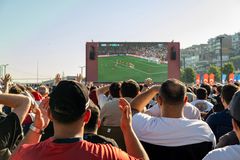
The stadium experience and the screen experience were once the same event seen from different distances, but each has been redesigned around the other for so long that they now offer genuinely different things.
A live picture passes through a long sequence of capture, mixing, compression and distribution before it reaches a screen, and almost every complaint a viewer has about quality or delay traces back to one identifiable stage in that chain.
Rights are sold in slices rather than whole, so a single season arrives split across separate windows and territories, and the fragmentation is a consequence of how the auction is designed rather than a failure of any one carrier.