Top
What it takes to follow a team from the wrong side of the world
Supporting a side whose matches happen while you sleep is a scheduling problem before it is anything else, and the people who sustain it build habits around the calendar rather than fighting it.
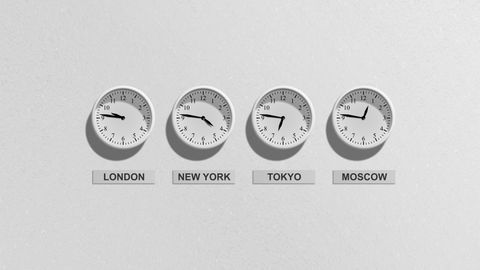
The calendar is written for somewhere else
A competition schedules its fixtures for the convenience of the market that pays most of its bills, which is usually the one where the clubs are based. Every other market receives that schedule translated into local time, and the translation is unforgiving once the gap between the two places grows large. A convenient weekend afternoon in one hemisphere lands somewhere between midnight and dawn in another, and no amount of enthusiasm makes that a sustainable weekly habit.
Distant supporters therefore end up following a version of the season that has been reshaped by arithmetic rather than by any decision they made. The strongest predictor of whether someone keeps up with a distant competition is not interest but whether the fixture list lands at survivable hours.
Delayed viewing is a different discipline
Watching a recording of a match whose result you do not know requires an information blackout that is far harder to maintain than it sounds. Results now arrive unprompted through notifications, message threads, incidental conversation and the ordering of items in whatever feed a person opens next. Even the shape of a page can give the result away, because a longer report or a particular tone of headline is readable without the words being read.
People who watch delayed matches build elaborate routines to protect themselves, and those routines are usually more effort than the viewing itself. The alternative is watching knowing the outcome, which is a genuinely different experience because tension is what most of a live match is made of.
Which parts of a season survive the distance
Distant supporters do not follow every fixture; they follow a subset selected by whichever matches happen to fall at a tolerable hour. That subset is biased towards the fixtures a competition promotes into premium slots, which means a distant fan sees a disproportionate share of the big occasions. Ordinary midweek fixtures, which are where a season is actually won and lost, are the ones most likely to disappear from a distant supporter's year.
The resulting picture of a season is real but incomplete, weighted towards spectacle and away from the accumulation that decides most competitions. This is worth knowing simply because it explains why supporters in different time zones often disagree about how a season actually went.
Community forms around the inconvenience
The unsociable hour turns out to be a bonding mechanism, because anyone else awake at that time has made the same decision for the same reason. Supporters' groups in distant cities exist largely to convert a solitary early morning into a shared one, which changes how sustainable the habit is. Venues that open outside normal trading hours for these gatherings become fixed points in a supporter's week in a way that no individual match is.
The social element also solves the information problem, since a room that has agreed not to know the result enforces the blackout collectively. Distance therefore produces a denser form of supporter culture than proximity does, because it demands a deliberate effort that a local fan never has to make.
Planning around the calendar rather than against it
People who sustain long-distance support tend to decide in advance which parts of the season they will genuinely follow and which they will accept second-hand. That decision is usually organised around the rhythm of the competition, protecting the concentrated stretches where several decisive fixtures fall close together. It also involves accepting a slower relationship with the sport, in which results are read in the morning and the pictures are caught up with later.
None of this is a compromise imposed by any broadcaster, since it follows directly from the rotation of the planet and where the fixtures were placed. Treating it as a fixed constraint rather than a grievance is what separates the supporters who last from those who quietly drift away after a season or two.
- A distant fan follows a calendar shifted into unsociable hours
- Avoiding the result is harder than watching the match
- Distance changes which parts of a season are realistically followable
Also by Priya Patel
- Loyalty and membership schemes are queueing systems dressed as rewardsTicket Guides
- Watching an away match in a room full of the other side's supportersSports Bars & Pubs
- The outside broadcast compound is a small factory, and it explains a lot about coverageBroadcast Schedules
- What a retractable roof does to a tennis day beyond keeping the rain offWimbledon