Arena Experiences
Why a covered stadium struggles to grow grass, and what venues do about it
Roofing a stadium solves the weather problem for spectators and creates an agricultural one for the playing surface, because grass needs the light, air movement and rainfall that the roof removes.
What grass actually needs
A grass playing surface is a living crop that requires light for growth, air movement to manage moisture, and drainage to remove water from the root zone. A stadium roof intercepts light, a continuous bowl blocks wind at surface level, and an enclosed structure keeps humidity high around the plants. The result is a surface that grows slowly, recovers poorly from wear, and is more vulnerable to disease than the same grass in an open field.
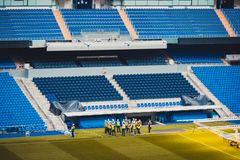
The problem is worst in the corners and along the edges beneath the tallest stands, which receive the least direct sun across the year. This is why patches of a pitch can look markedly different from the rest even when the whole surface receives identical maintenance.
Shade is a geometric problem
The amount of light reaching any point on a pitch depends on the height of the surrounding stands, the size of the roof opening and the path of the sun. Because the sun sits lower in winter, the shaded area grows through exactly the part of the season when the surface is under the most use. Venues model this at design stage, and the shape of the roof opening is frequently determined by the light requirement rather than by architecture.
Even so, a stadium built for a large capacity in a temperate climate will have areas that receive insufficient natural light for part of the year. The design therefore accepts the deficit and plans to make it up artificially.
Artificial light and forced air
Grow lighting rigs are moved across the surface to deliver light to the areas that need it, running for long periods between fixtures. These rigs are large, heavy and power-hungry, and their scheduling around the pitch is a continuous operation throughout the growing season. Ventilation systems move air across or through the surface, reducing humidity at the leaf and discouraging the diseases that thrive in still damp conditions.
Undersoil systems manage root zone temperature, extending the growing period at both ends of the year and preventing freezing. A modern pitch is therefore a managed environment rather than a field, with running costs to match.
Hybrid construction
Most elite pitches are now hybrid, combining natural grass with synthetic fibres either stitched or injected into a sand-based root zone. The fibres do not grow but they stabilise the surface, holding the root zone together so that divots are smaller and recovery is faster. This makes a surface far more tolerant of heavy use, which matters enormously at venues hosting multiple events in a week.
The construction also improves drainage, since a sand-based profile moves water downward much faster than natural soil. The trade is cost and complexity, since a hybrid surface requires specialist installation and specialist maintenance.
Removable and modular surfaces
Some venues avoid the problem entirely by growing the pitch outside and moving it into the bowl only when required. These systems carry the surface on trays or a sliding tray that is stored in daylight and brought inside for events. The engineering is substantial and the capital cost is very high, which is why the approach appears mainly at venues that host several different sports.
It solves the light problem completely and introduces new ones concerning joints between sections and the stability of the assembled surface. Every one of these approaches is a different answer to the same conflict between what spectators want overhead and what grass needs.
- Roofs and tall stands create permanent shade over parts of a pitch
- Lighting rigs and ventilation substitute for sun and wind
- Hybrid and removable surfaces are engineering answers to the same problem
Also by David Smith
- The scarf survives every merchandise cycle because it does something no shirt canMerchandise Reviews
- What happens to a live stream once it enters your own home networkStreaming Guides
- Neutral venues change who is in the ground, and that changes the whole dayICC
- Why a global tournament is the hardest event in sport to watch at a sensible hourFIFA