Arena Experiences
Sightlines are decided by geometry set long before anyone chooses a seat
Whether a spectator can see over the person in front is determined by the rise between rows, the distance to the pitch and the height of the first row, all of which are fixed when a stand is built.
The measurement that governs everything
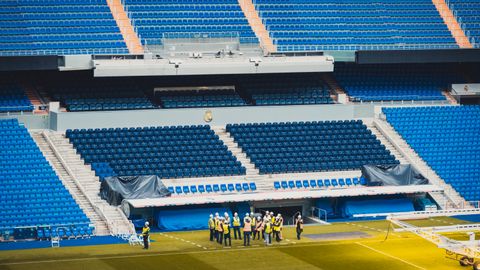
Stadium design uses a figure describing how much higher each row sits than the one in front, measured against the point a spectator most needs to see. A larger figure means a spectator sees comfortably over the head in front, while a smaller one means they see over the shoulder and lose the view when people stand. The required figure grows as a stand gets closer to the action, because a nearby point of interest sits at a steeper angle below the eye.
This is why stands set close to the touchline are raked so much more steeply than stands set back behind a running track. Every other property of a stand, including its height and its footprint, follows from this one geometric requirement.
Why the first row matters so much
The height of the first row above the playing surface sets the starting point from which the whole rake is calculated. A first row at surface level gives a spectacular sense of proximity and a genuinely poor view of anything on the far side of the pitch. Raising the first row improves the view across the field but pushes the whole stand upward and increases the total structure required.
Designers therefore trade the experience of the closest spectators against the total volume of the building. The result is that front-row places in modern stadiums are frequently less desirable than places some rows back, despite costing more.
Ends and corners distort the view
A spectator behind a goal sees the pitch foreshortened, which compresses the far half into a narrow band and makes distances hard to judge. That view is excellent for reading attacks developing towards the near goal and poor for understanding play at the other end. Corner positions combine both problems, offering an oblique view along both axes and the least intuitive read of positioning.
Broadcast cameras sit at the halfway line for exactly this reason, since that position is the only one where the geometry is undistorted. Spectators who prefer to follow shape and structure choose side positions, while those who prefer proximity and intensity choose the ends.
Height versus distance
A higher position gives a more complete view of the whole field, and the ability to see space develop before the players in it react. It also increases distance, which reduces the amount of detail visible and weakens the sense of being present at the event. The best compromise in most stands is the upper part of a lower tier or the front of an upper tier, where both properties are reasonable.
Those positions are usually recognised in the pricing, though the relationship between price and view is inconsistent between venues. A seating plan cannot convey any of this, which is why photographs taken from specific positions are far more useful than a map.
Obstructions and what a plan does not show
Older stands contain columns supporting the roof, and any position behind one has a permanently obstructed view of part of the field. Venues are generally required to identify such positions and to price or label them accordingly, though the practice varies. Less obvious obstructions include safety barriers, camera platforms, and the overhang of a tier above cutting off the view of high balls.
Sun position is another factor invisible on a plan, and a stand facing into a low afternoon sun is uncomfortable regardless of its geometry. These are the details that separate a good seat from an adequate one, and almost none of them appear in a seating diagram.
- The rise between rows determines the view over the row in front
- Distance to the nearest point of action drives the required rake
- Corner and end positions distort the geometry of the playing area
Also by Rohan Desai
- What a tifo display takes to put up, and why it is never spontaneousFan Zone
- Adaptive bitrate explains why a picture softens exactly when the action speeds upStreaming Guides
- Why a day-night match changes almost everything about attending oneICC
- How a World Cup ticket ballot works and why demand is handled in phasesFIFA