FIFA
How a World Cup ticket ballot works and why demand is handled in phases
Entry to a tournament is rationed by a sequence of application windows rather than sold on a first-come basis, and the phasing exists to manage uncertainty that neither the organiser nor the applicant can remove.
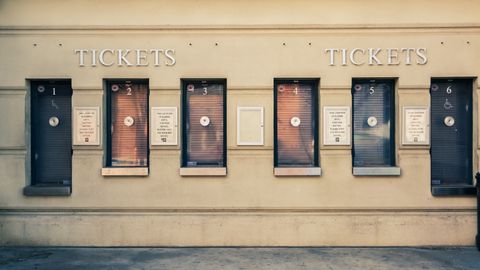
Why a ballot rather than a queue
Demand for a major tournament exceeds supply by an enormous margin, and a first-come system under that pressure simply rewards whoever has the fastest connection. A simultaneous rush also concentrates every request into a few minutes, which is the hardest possible load pattern for any system to survive intact. A ballot spreads applications across a window of days, so the infrastructure handles a steady flow rather than a spike that would take it offline.
It also changes the fairness argument, because random selection among valid applications is defensible in a way that rewarding connection speed is not. The trade is that an applicant loses the sense of agency that a queue provides, which is why ballots feel worse even when they distribute more evenly.
What the early phases actually sell
The first application windows open long before anyone knows which teams will qualify, let alone which of them will play where. Applicants at that stage are choosing a venue and a date, or a series of fixtures at one venue, without knowing who will be on the pitch. This suits the organiser, because it sells the fixtures nobody would choose deliberately alongside the ones everybody wants, using uncertainty as the mixing mechanism.
It suits a certain kind of supporter too, namely one who wants to attend the tournament rather than to follow one particular team through it. Anyone whose interest is specifically in one team is structurally disadvantaged in these phases and generally has to wait for a later window.
Team allocations sit outside the public ballot
A share of every stadium is reserved for the supporters of the two teams playing, and that share is distributed through each national association rather than the general sale. Access to it usually depends on some record of prior attendance, which means the allocation rewards accumulated loyalty rather than the luck of a draw. These allocations are released only once the fixture is known, which for knockout rounds can be a matter of days before the match itself.
The result is two quite different routes into the same stadium, operating on different timescales and different criteria, for the same fixture. Supporters who understand both routes apply through the general ballot as insurance while pursuing the association route as their actual plan.
Late phases and returned inventory
Inventory returns to the pool continuously as applications lapse, payments fail, hospitality arrangements go unsold and contingency holdings are released. That returning inventory is usually offered in later windows or on a rolling basis, which is why the tournament never entirely stops selling. Late availability is unpredictable in both timing and location, so it rewards people who are already in the host country and can act on short notice.
It is also the phase in which the gap between an official channel and an unofficial one matters most, because urgency is what fraudulent sellers exploit. The only reliable protection is that a document which cannot be verified through the tournament's own system is not an entry document, whatever it looks like.
Why the whole structure is unstable by design
Each phase exists to absorb a particular kind of uncertainty, which is why the number of phases grows as tournaments get larger and more distributed. Organisers also learn from each edition, so the sequence is redesigned every cycle and past experience is a weak guide to the next process. What does persist across editions is the underlying logic, namely that venue-based selling happens early and team-based selling happens late.
An applicant who understands that logic can position themselves correctly even when the specific mechanics have been rearranged since the previous tournament. The details of any given cycle are published by the organiser and are the only version worth planning against.
- A ballot converts a queue into a lottery to prevent a system collapse
- Early phases sell venues and dates rather than fixtures
- Team allocations are reserved and released separately from public sale
Also by Rohan Desai
- Sightlines are decided by geometry set long before anyone chooses a seatArena Experiences
- What a tifo display takes to put up, and why it is never spontaneousFan Zone
- Adaptive bitrate explains why a picture softens exactly when the action speeds upStreaming Guides
- Why a day-night match changes almost everything about attending oneICC