Fan Zone
What a tifo display takes to put up, and why it is never spontaneous
A large coordinated display is a construction project carried out by volunteers under supervision, and everything visible for those thirty seconds was negotiated with the club weeks earlier.
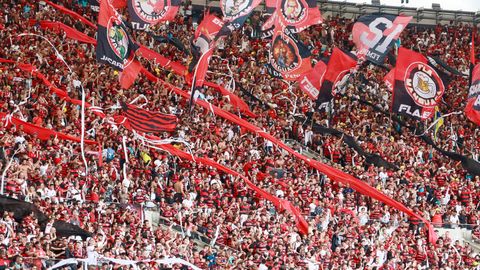
A display is a planned operation
The impression a large display gives is of a crowd spontaneously producing something enormous, which is precisely the opposite of how it happens. Planning usually begins weeks ahead with a design, a decision about which sections will be covered, and an estimate of the materials required. The materials then have to be produced, which for a full-stand display means a large amount of fabric or paper printed or painted by hand.
Storage becomes an immediate problem, since the finished item is bulky and has to be kept somewhere until the fixture. None of this is possible without a group that meets regularly and can commit labour across several weeks.
Approval is not optional
Anything covering a stand affects sightlines, evacuation routes and the behaviour of a crowd, so it requires the club's agreement and safety sign-off. Material specifications matter, particularly regarding flammability, and clubs will require evidence that what is being brought in meets the relevant standard. Access to the stand before the gates open is also required, which means stewarding and staff time that the club has to arrange.
Groups that build a reliable working relationship with a club get this access routinely, while those that do not are refused. The safety officer and the local authority set the conditions, and their requirements take precedence over any group's plans.
Distribution is the hard part
A stand-wide display consists of many separate pieces that each have to reach the correct seat before the crowd arrives. Placing them is straightforward; ensuring they stay where they were placed while a stand fills is considerably harder. Groups mitigate this with clear instructions, with volunteers positioned through the stand, and with designs that tolerate a proportion going missing.
The timing is tight, because the display has to be ready at a specific moment and the crowd only arrives shortly before it. This is why the same groups do it repeatedly, since the operational knowledge is worth more than the design skill.
Afterwards is somebody's job too
A display leaves a stand covered in material that has to be collected before it becomes a hazard or a cleaning bill. Groups that fail to manage this find their next application refused, since the club is left with the cost and the risk. Reusable displays are collected, checked and stored for future fixtures, which is why some designs reappear across seasons.
Single-use displays are cheaper to produce and considerably more expensive to clear, which shapes what groups choose to attempt. The clearing operation is invisible and is a genuine part of what makes a display possible at all.
Funding and the limits of ambition
Displays are paid for by supporter groups through collections, merchandise sales and occasionally club contributions towards materials. That funding model caps the scale of what is achievable and explains why the largest displays cluster at clubs with the most organised supporter structures. Some clubs fund displays directly, which produces more of them and changes their character, since a club-funded display is a marketing asset.
Groups differ sharply on whether that is acceptable, and the argument is about ownership of supporter culture rather than about money. It is one of the clearest illustrations of the general tension between organised support and the institutions it supports.
- Large displays require club approval and safety sign-off
- Distribution and collection are the hardest logistical parts
- Funding and labour come from supporter groups rather than clubs
Also by Rohan Desai
- Sightlines are decided by geometry set long before anyone chooses a seatArena Experiences
- Adaptive bitrate explains why a picture softens exactly when the action speeds upStreaming Guides
- Why a day-night match changes almost everything about attending oneICC
- How a World Cup ticket ballot works and why demand is handled in phasesFIFA