Sports Bars & Pubs
What separates a bar that shows sport from a bar built to watch sport in
Screens are the least important part of a venue that works for live sport, because sightlines, sound routing and the shape of the room decide whether a crowd can follow a match together.
Screens are the easy part
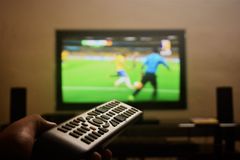
Fitting screens to a room is cheap and visible, which is why almost every venue that wants sport trade starts and often finishes there. A large screen in a poorly arranged room is worth less than a modest one placed where the majority of the standing crowd can actually see it. The relevant measurement is not diagonal size but angular size from the positions people will occupy, which depends on distance far more than on the panel.
A screen twice as far away needs to be roughly twice as large to look the same, and most rooms run out of wall long before that. Venues that work well tend to use more screens at moderate size rather than a few large ones, because that solves the distance problem directly.
Sightlines from a standing crowd
A room fills up before a significant fixture, and once it is full the people at the back are looking over several rows of heads rather than at a clear wall. Screens mounted at seated eye level disappear entirely in that situation, which is why height above the floor matters more than any other mounting decision. Mounting too high creates its own problem, since a steep viewing angle is uncomfortable to hold for the length of a match.
The workable compromise puts screens above standing head height but low enough that the neck is not extended, which is a narrow band. Rooms with pillars, low beams or a bar counter running down the middle have obstructions that no screen placement can fully overcome.
Sound is the part that gets neglected
Commentary in a busy room competes with a crowd, and simply increasing the volume produces a wash in which nothing is intelligible. Venues that handle this well use multiple small speakers distributed near the screens rather than a few loud ones at the ends of the room. Distributed sound lets each part of the room hear its own screen at a moderate level, which reduces the total noise and improves clarity simultaneously.
It also allows different screens to carry different events, which is only workable if the audio does not bleed across the whole space. Hard surfaces make all of this worse by extending reverberation, which is why a room full of glass and tile is difficult regardless of the equipment installed.
The floor plan decides the atmosphere
A long narrow room splits a crowd into groups that cannot see each other, so reactions arrive as a series of separate noises rather than one. A room with a broad sightline towards a common focal point lets the whole crowd react together, which is what people actually come for. Circulation matters too, since a room where the route to the bar crosses the main viewing area produces constant interruption at the worst moments.
Venues that take sport seriously usually separate the service route from the viewing area, even at the cost of some floor efficiency. These are design decisions taken when a room is fitted out, which is why some venues never work for sport no matter how much equipment is added.
Why the good ones are usually specialists
A venue that serves sport properly makes compromises that reduce its usefulness for everything else, including layout, sound and furniture. That specialisation limits the trade available on days without significant fixtures, which is a real commercial cost. Venues unwilling to accept it end up with a general room that has screens in it, which is a different and less satisfying product.
Supporters can usually tell the difference within a minute of walking in, because the tell is the arrangement of the room rather than anything on the wall. The best indicator is simply whether the furniture faces the screens or faces itself.
- Sightlines from standing positions matter more than screen size
- Audio routing decides whether commentary is intelligible
- A room designed for drinking is not a room designed for watching
Also by Tom Harrison
- Printed names and numbers fail in predictable ways, and the method explains whichMerchandise Reviews
- Why kick-off times move, and who is actually being served when they doBroadcast Schedules
- The queue as an entry system: how a physical line rations access to a tennis groundWimbledon
- Why following one competition now means assembling coverage from several sourcesTop