Sports Bars & Pubs
Why the roar from next door arrives before the goal on your screen
Different ways of receiving the same event carry different amounts of delay, so a crowd spread across several delivery methods experiences the same moment at noticeably different times.
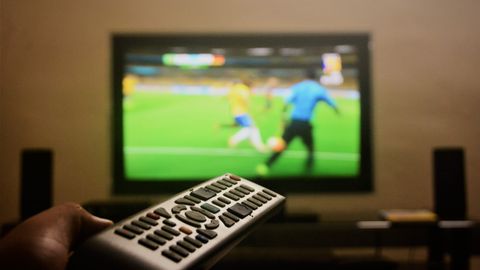
Everyone is watching a different version of now
Two venues on the same street showing the same fixture may be several seconds apart, because they are receiving the event through different distribution paths. A traditional broadcast path is relatively short and specialised, while a streamed path passes through additional stages that each hold a small store of video. The difference is not fixed, since it depends on the specific service, the device and the conditions on the network at that moment.
What is consistent is the ordering, with satellite and cable generally ahead of internet delivery and low-latency streaming modes somewhere between. The audible consequence is a celebration that travels down a street in stages rather than happening all at once.
Text beats pictures every time
A notification containing a result is a tiny amount of data that travels almost instantly and requires no buffering of any kind. Video is orders of magnitude larger and must be encoded, packaged, distributed and decoded before anyone sees it. That asymmetry means an alert about a goal will reliably arrive before the goal appears on any screen, regardless of how the video is being received.
Anyone in a room with phones in it is therefore watching an event whose outcome is already circulating around them. This is a structural property of the two media rather than a fault in any particular service.
Why venues cannot simply fix it
A venue can align the screens it controls by feeding them from the same source, which removes internal disagreement about when something happened. It cannot align itself with the venue next door, with people watching on phones inside the room, or with anyone receiving the event another way. Deliberately delaying its own feed to match the slowest source would put the venue behind everyone else, which is worse rather than better.
The only real mitigation is to be on the fastest available path, since being ahead is far less disruptive than being behind. Venues that care about this choose their delivery method for latency rather than for convenience or cost.
What the delay does to a crowd
A room that hears a celebration from outside before seeing the moment loses the surprise, which is a substantial part of what the crowd came for. It also produces a strange compressed reaction, where the room braces for something it knows is coming and then responds to confirmation rather than to the event. Where several fixtures matter simultaneously, the effect multiplies, because news from one venue propagates while another is still catching up.
On days when many results interact, this produces the familiar experience of a room reacting to something nobody in it has actually seen yet. It is one of the few genuinely new features of watching sport in public, and it has no equivalent in the era before instant messaging.
Living with it rather than solving it
Groups that watch together frequently adopt informal rules about phones, which work exactly as well as the group's willingness to follow them. The alternative is to accept that the room will know before it sees, and to treat the screen as confirmation rather than as revelation. Some supporters actively prefer the fastest possible information and are untroubled by the loss of surprise, which is a legitimate position.
The tension between those two preferences is why the phone question comes up in almost every group that watches sport socially. Neither preference is going to win, because the underlying difference in delivery speed is not going to close.
- Delivery methods differ in delay by several seconds
- Notifications travel by the fastest route of all
- Venues can only align the sources they control
Also by Emily Davis
- Why retro kits sell hardest to people who never saw the season they come fromMerchandise Reviews
- Territory rights explain most of the confusion about where a match can be seenBroadcast Schedules
- Why the order of play at a tennis championship can never be a scheduleWimbledon
- From camera position to living room: the chain a live picture travels downTop