Broadcast Schedules
Territory rights explain most of the confusion about where a match can be seen
Coverage stops at borders because it was sold at borders, and the technical systems that enforce those borders were built long after the contracts that require them.
Why rights are sold by territory at all
A competition selling coverage wants to charge each market what that market can bear, and markets differ enormously in size, wealth and interest in a given sport. Selling one global licence would force a single price, which either prices out smaller markets entirely or leaves money uncollected in larger ones. Territorial licensing solves that by letting the seller run a separate negotiation in each market with buyers who understand local conditions.
It also lets local carriers add commentary, studio presentation and scheduling that suit local habits, which raises the value of the coverage in that market. The arrangement is therefore commercially rational, and it long predates any of the technology now used to keep it working.
Borders used to enforce themselves
When coverage travelled by terrestrial transmission, its reach was determined by the physics of the signal and stopped at roughly the edge of the transmitter's range. That physical limit did the enforcement work for free, and contracts written around it did not need to specify any mechanism at all. Satellite began to complicate this, since a footprint does not respect a border, and encryption became the practical way to restore the boundary.
Internet distribution removed the last physical constraint entirely, because a stream is equally reachable from anywhere unless something deliberately prevents it. Every restriction a viewer now encounters is therefore a software reconstruction of a limit that used to exist for free.
What the enforcement actually does
A distribution system decides whether to serve a request by inferring a location from the connection making it and comparing that with the licence in force. The inference is imperfect, which is why people occasionally find themselves treated as being in a country they are nowhere near. It is also the reason coverage that works at home may stop working while travelling, since the licence follows the location rather than the person.
Rights holders monitor for circumvention because their obligations to each licensee include preventing coverage leaking into that licensee's market. None of this is a judgement about individual viewers; it is contractual machinery operating on connection attributes.
Why adjacent markets look completely different
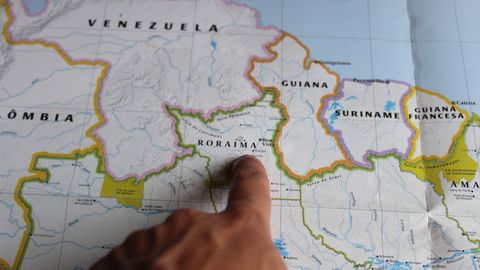
Two neighbouring countries can have entirely different coverage of the same event, because the rights in each were sold separately to different buyers on different terms. One market may have every fixture available while the next has a selected few, simply because the buyers valued the inventory differently. Language is a complicating factor, since a market that shares a language with a larger neighbour is exposed to that neighbour's coverage in a way others are not.
Sellers manage this by writing language rights separately from territorial ones, which adds another dimension to what is already a complex grid. The result is a patchwork that looks arbitrary from outside but follows directly from how each individual negotiation concluded.
Why the system persists despite the friction
Territorial licensing survives because it collects more money than a global licence would, and competitions are structured around that revenue. It also survives because local carriers, who invest in production and promotion, will not do so without protection from coverage arriving from elsewhere. Attempts to sell coverage globally have generally been partial, applying to particular sports or particular audiences rather than replacing the model.
The friction falls on viewers who move between markets or who follow a competition based somewhere other than where they live. That group is growing, which is why the pressure on the model keeps increasing even though the economics of it have not changed.
- Rights are licensed territory by territory for pricing reasons
- Borders once enforced themselves and now require software
- A single event can have entirely different coverage in adjacent markets
Also by Emily Davis
- Why retro kits sell hardest to people who never saw the season they come fromMerchandise Reviews
- Why the roar from next door arrives before the goal on your screenSports Bars & Pubs
- Why the order of play at a tennis championship can never be a scheduleWimbledon
- From camera position to living room: the chain a live picture travels downTop