Broadcast Schedules
How a season of coverage is planned long before anyone knows which matches will matter
The people who build a broadcast calendar are allocating cameras, staff and satellite capacity around a fixture list whose significance is entirely unknown, and their solution is to plan for flexibility rather than for accuracy.

Resources are finite and booked early
Covering a fixture requires cameras, a production unit, engineers, commentators and a path to get the signal out, none of which exist in unlimited quantity. Those resources are committed months ahead, because the specialist equipment and the people who operate it are shared across every event happening that weekend. A broadcaster therefore books capacity against a fixture list long before it knows which of those fixtures will turn out to be significant.
Booking on the basis of expected importance is the only option available, and expected importance is estimated from history rather than from the current season. This is why coverage occasionally arrives in force at a fixture that has become meaningless and lightly at one that has become decisive.
Coverage comes in tiers
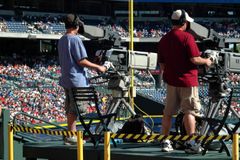
Not every fixture receives the same production, and broadcasters operate tiers that differ in camera count, on-site staffing and how much surrounding programming is built around them. A top-tier fixture may involve a large compound and a substantial crew, while a lower tier is covered with a compact unit and a smaller camera plan. Tiering exists because covering everything at the highest level would be unaffordable and would exhaust the available specialist resources within a single weekend.
The tier assigned to a fixture is a forecast of its importance, and the forecast is made when the schedule is built rather than when the fixture arrives. Upgrading a fixture late is possible but expensive, since it means finding crew and equipment that were already allocated elsewhere.
Contingency is designed into the plan
Because fixtures move, a coverage plan is built with slack in it, including crews held without a specific assignment and equipment kept in reserve. That slack looks wasteful on paper and is the only reason a schedule survives the cascade of changes that a season inevitably produces. Broadcasters also standardise their production setups so that a unit assigned to one venue can be redeployed to another without redesigning the camera plan.
Venues help by maintaining permanent cabling and camera positions, which removes a large part of the setup time when coverage arrives at short notice. The industry's ability to move coverage quickly is therefore built on years of standardisation rather than on improvisation on the day.
Remote production changed the arithmetic
Sending every operator to every venue is expensive, and a growing share of production now happens at a central facility with only cameras and a small crew on site. This works because a reliable high-capacity connection can carry many camera feeds back to a gallery that may be hundreds of miles away. The saving is substantial, and it allows a broadcaster to cover more fixtures at a reasonable standard than a fully on-site model ever could.
It also concentrates risk, since a single central facility now supports many simultaneous events rather than each event being independent. Broadcasters manage that concentration with redundancy in the connection and the gallery, which is why the model has spread despite the exposure it creates.
What the audience sees of all this
Viewers experience the planning only through its failures, noticing when a fixture receives fewer angles or when a replay is unavailable from the useful side. Those gaps are almost always resource decisions made long in advance rather than judgements about the fixture in front of them. The same is true of production quality across a competition, which varies because the tiers vary rather than because effort does.
Understanding the tier system explains most of the inconsistency an audience notices across a season of coverage. It also explains why coverage of a competition improves in the closing weeks, when the fixtures that matter have been identified and resourced accordingly.
- Production resources are booked before selections are made
- Coverage tiers let a broadcaster scale effort to importance
- The plan is built to absorb changes rather than to predict them
Also by Aarav Sharma
- Dynamic pricing behaves like a thermostat, which is why a ticket price movesTicket Guides
- How a room's layout decides whether a crowd watches together or in fragmentsSports Bars & Pubs
- A ground pass buys optionality, and that changes how the whole day is spentWimbledon
- Attending and watching are different products, and each keeps reshaping the otherTop