Wimbledon
Why the order of play at a tennis championship can never be a schedule
Matches at a multi-court tournament run in sequence rather than to fixed times because their length is unknowable in advance, and every complaint about unpredictable start times traces back to that single fact.

A sport without a clock cannot be timetabled
Almost every team sport runs to a fixed duration, which is why a fixture can be given a start time and an approximate finish time months ahead. Tennis has no such limit, since a match ends when someone has won enough sets and that can take a fraction of an afternoon or the whole of it. The variance is not small, because two matches at the same standard on the same surface can differ in length by a factor that ruins any fixed plan.
A tournament running many matches across many courts therefore cannot publish start times without either wasting most of its court hours or breaking its own promises. The order of play is the honest response to this, publishing sequence and leaving the timing to be determined by what actually happens.
Each court is a queue, not a calendar
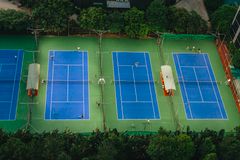
A court is allocated a list of matches for the day, and each one begins when the previous match has finished and the court has been reset. Only the first match on each court has a genuine start time, and everything after it is expressed as following on rather than as a time of day. This means the same match can begin in the middle of the afternoon or late in the evening depending entirely on what happened earlier on that court.
Spectators holding entry for a specific court experience this as uncertainty, while the tournament experiences it as the only way to use its courts efficiently. Understanding a court as a queue rather than as a venue with a timetable removes most of the frustration of following it.
How the ordering itself is decided
Tournaments place the matches they expect to draw the largest audience on the courts with the largest capacity and the widest coverage. Within a court, the ordering has to balance the desire to put significant matches at prominent times against the risk of a long earlier match pushing everything back. Placing a match with an unpredictable length first can protect the rest of the day, while placing it last risks it being suspended and resumed on another date.
Considerations such as players who competed the previous day, or who are also entered in other events, further constrain what can go where. The published order is therefore the output of a fairly involved optimisation rather than a simple ranking of which matches matter most.
Weather rewrites everything
An interruption does not simply delay a court; it compresses the remaining matches into fewer hours and forces decisions about what to move and what to abandon for the day. Courts with covers can continue while others cannot, which means an interruption changes the relative value of different entries in an instant. Matches moved to another day inherit a different court and a different position in a new order, so a spectator's plan can be invalidated entirely.
Tournaments hold reserve capacity in the schedule precisely for this, which is one reason the early rounds are packed more tightly than they need to be. The tournament's own announcements on the day are the only reliable source once weather has begun to move things, since printed orders go out of date immediately.
What this means for planning a day
A spectator who arrives expecting a particular match at a particular hour is planning against a document that never claimed to promise that. The more workable approach is to treat the order as a probability distribution, arriving early enough to see whatever is on and staying for what follows. People who attend regularly tend to plan around courts rather than around matches, choosing where to sit and accepting whatever the queue delivers.
That approach also produces the accidental discoveries that people remember, since the match nobody planned to watch is frequently the best one of the day. It is a different way of consuming a sport, and it is closer to how a festival works than to how a fixture list works.
- Tennis has no clock, so start times cannot be fixed
- Courts run as queues, with each match starting when the last one ends
- Scheduled matches on a show court behave differently from those on outside courts
Also by Emily Davis
- Why retro kits sell hardest to people who never saw the season they come fromMerchandise Reviews
- Why the roar from next door arrives before the goal on your screenSports Bars & Pubs
- Territory rights explain most of the confusion about where a match can be seenBroadcast Schedules
- From camera position to living room: the chain a live picture travels downTop