Fan Zone
Why atmosphere is a structural property of a stand rather than a mood
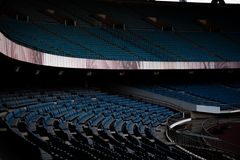
The noise a crowd produces is shaped by how close it sits to the pitch, how steeply it is raked and what surfaces surround it, which is why some grounds are loud with modest crowds and others are quiet when full.
Noise has to be retained to be heard
A crowd in an open stand projects most of its sound upward and outward, where it disperses into the sky and never returns to anyone in the ground. A roof over that same stand reflects a substantial part of it back down into the seating bowl, which is why covered stands sound dramatically louder. The lower and closer the roof, the more of the sound is retained, which is one reason older grounds with tight roofs feel intense.
Modern stadiums with high roofs over large volumes lose more of it, and they compensate with absorptive treatment that also reduces perceived loudness. The difference between two grounds with identical crowds is therefore frequently a difference in what is above the crowd rather than in the crowd itself.
Proximity to the pitch
A stand set close to the touchline puts the crowd inside the players' immediate environment, and the noise arrives at the pitch without travelling far enough to weaken. Grounds with running tracks or wide surrounds push the crowd back, and the same number of people produce noticeably less presence on the field. Proximity also affects the crowd, since a spectator close enough to hear players and to be heard by them behaves differently from one at a distance.
This is why converted athletics venues so consistently disappoint as football grounds, regardless of how impressive they are otherwise. It is the single design decision with the largest effect on how a ground feels from both sides of the barrier.
Rake and the density of a stand
A steeply raked stand puts more people into a smaller footprint and stacks them nearly on top of one another, which concentrates the source of the sound. A shallow stand spreads the same crowd over a larger area, so the noise originates from a broad surface and arrives diffusely. Steep raking also improves sightlines, which means the crowd is more engaged and reacts faster to what is happening.
The limits on rake are set by safety and by the practicalities of evacuation, which is why there is a maximum beyond which no stand goes. Within those limits, the steeper option is almost always the louder one.
Continuous bowls versus separate stands
A continuous bowl distributes the crowd evenly around the pitch, which looks impressive and spreads the noise sources around the whole circumference. Four separate stands concentrate the crowd into blocks, and a block of people singing together is a far more effective sound source than the same people spread thinly. Separate stands also create ends, which is where the most committed support traditionally gathers and where organised singing usually originates.
A bowl blurs those distinctions, and clubs moving into one frequently spend years trying to recreate the concentration they lost. Some do this by designating sections and allocating tickets accordingly, which is an attempt to rebuild by policy what the architecture removed.
Surfaces and what they do to sound
Hard reflective surfaces keep sound alive in a space, while soft absorptive ones remove it, and every material choice in a stand contributes to this balance. Modern stadiums use absorptive materials extensively for reasons of comfort, weather and controlling announcements, all of which work against atmosphere. The public address system is itself a factor, since a system that must be intelligible needs a space that does not reverberate excessively.
Designers therefore face a genuine conflict between a venue that carries crowd noise and one where announcements can be understood. The compromise reached is usually visible in the ceiling treatment of a stand, and it explains a great deal about how that stand sounds.
- Proximity and rake matter more than capacity
- A roof retains sound that an open stand loses
- Continuous bowls disperse noise that separate stands concentrate
Also by Michael Johnson
- Why a resale market forms the instant a ticket is worth more than its printed valueTicket Guides
- Why some competitions protect a window in which no match may be shownBroadcast Schedules
- An outside court is a different thing to watch than a show courtWimbledon
- Why the way fans pay to watch keeps getting rebuilt every few yearsTop