Arena Experiences
What Changes When You Arrive Ninety Minutes Early
Arriving well before a fixture alters access to almost every part of a venue, and the difference between an early and a late arrival is larger than most attendees expect.
Attendance advice consistently recommends arriving early, usually without explaining what the extra time buys. The differences are concrete and affect most of what a spectator does at a venue.
Entry becomes a different process
Security and ticket checks operate at a fixed rate, and an arrival ninety minutes early meets almost no queue while an arrival at kick-off meets the entire crowd.
Problems are also solvable early. A ticket that fails to scan can be resolved at a box office that is staffed and quiet rather than overwhelmed.
Later arrivals with the same problem frequently miss the opening period entirely, because the resolution takes as long either way.
Concessions price time rather than food
Catering queues follow the same curve as entry, concentrating immediately before the start and at the interval.
An early arrival is served in minutes, and the same purchase at the interval can consume the entire break.
Venues site additional outlets away from the main concourses specifically to spread this, and those are the ones early arrivals have time to find.
What warm-ups actually offer
The period before a fixture is the only time spectators see players at close range, particularly at venues where warm-up areas are near the lower seating.
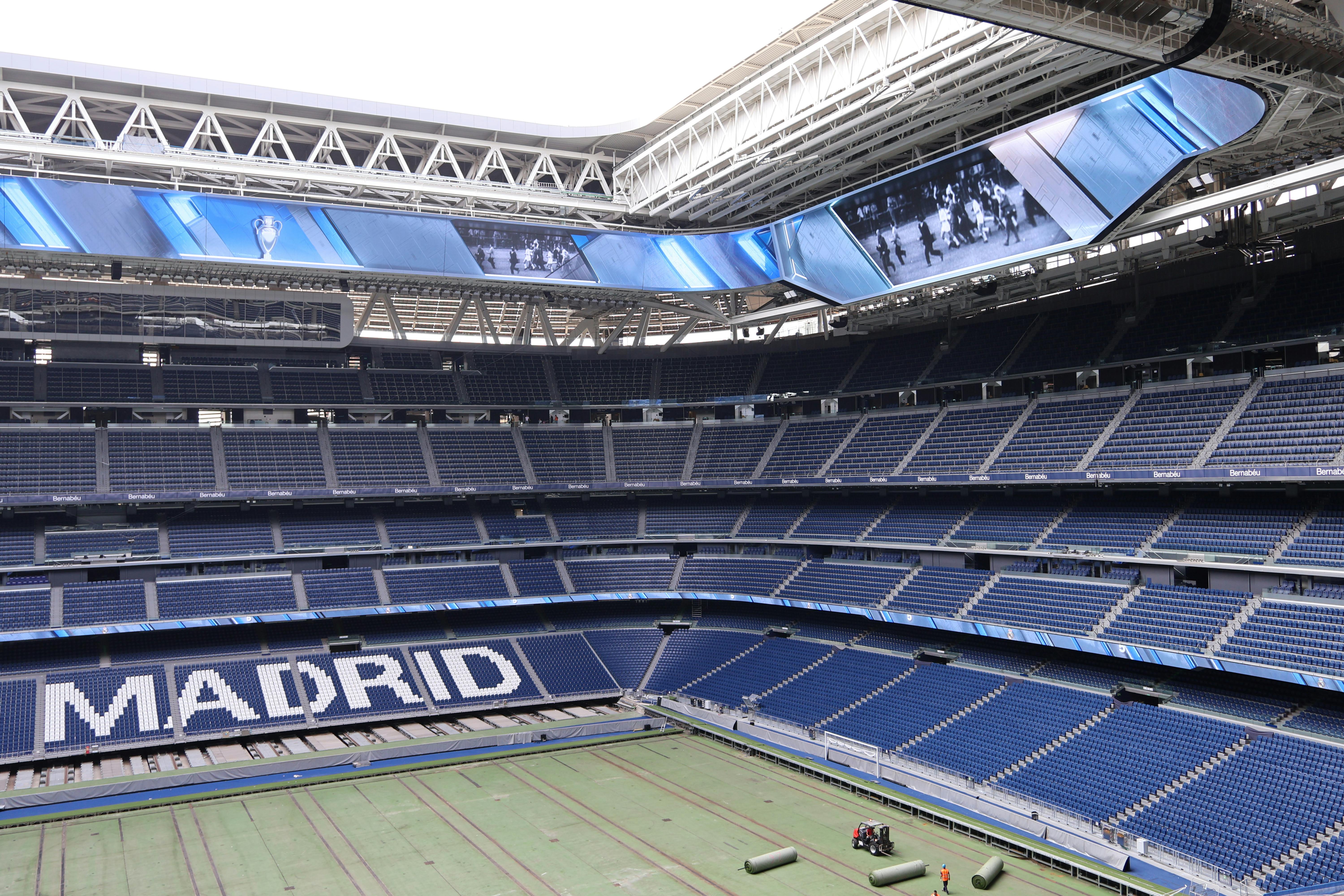
It is also when the venue is quiet enough to appreciate its scale, which is largely lost once the crowd assembles.
For a first visit this is a substantial part of what the ticket provides and is entirely missed by an arrival at the scheduled start.
Finding the seat without pressure
Large venues are genuinely confusing, with entrances, levels and blocks that do not follow an obvious order from outside.
Locating a seat with time in hand allows a wrong turn to be corrected, and lets a spectator identify the nearest facilities before needing them.
Groups arriving separately also benefit, since meeting inside is straightforward early and close to impossible in a full concourse.
Where the trade-off lies
Arriving early costs time and usually money, since the extra hour is spent inside a venue where everything is priced accordingly.
Transport is the counterweight, as arriving early and leaving late both avoid the crush, and the total time cost is smaller than it appears.
For a familiar venue with a straightforward journey the advice matters less, and it is a first visit or a high-demand fixture where the difference is decisive.
Also by Ryan Graves
- Advanced Analytics: How seat view analytics Shapes arena acoustic dampening OutcomesArena Experiences
- Advanced Analytics: How spectator engagement programs Shapes venue accessibility models OutcomesArena Experiences
- Advanced Analytics: How acoustic engineering designs Shapes hospitality packages OutcomesArena Experiences
- Advanced Analytics: How arena acoustic dampening Shapes spectator engagement programs OutcomesArena Experiences