ICC
What spectators are actually waiting for when rain stops a cricket match
A stoppage is not simply a pause until the rain ends, because the surface, the light and the remaining time all have to be assessed before play can restart, and each is decided by a different person.
The rain stopping is only the first condition
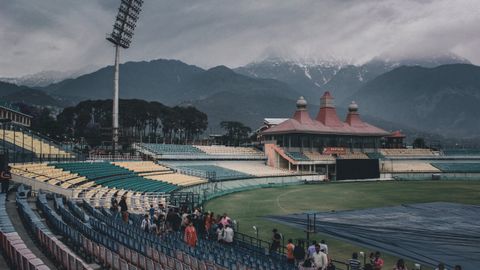
Spectators watching the sky clear frequently expect an immediate restart, and are then puzzled by the long interval that follows the last drop of rain. The delay exists because the ground itself has to be assessed, and that assessment covers the pitch, the run-ups and the whole of the outfield separately. Water that fell during the stoppage is still present in the turf and the soil below it, and drainage takes time that is independent of the weather above.
Officials also have to judge light levels, since a passing weather system usually leaves heavy cloud that reduces visibility even after the rain stops. The restart therefore depends on several independent conditions all being satisfied at once rather than on one obvious signal.
Covers protect the pitch and displace the problem
Covering a pitch keeps the playing surface dry, which preserves the fairness of the contest and prevents the match from becoming a different game after a shower. What covers cannot do is stop the water, which runs off them and concentrates at their edges into the surrounding turf. That is why the areas immediately around a covered pitch, including the bowlers' run-ups, are often the wettest parts of the ground once covers come off.
A run-up that is unsafe underfoot prevents play just as effectively as a wet pitch, and it takes longer to dry because it has received concentrated runoff. Modern grounds mitigate this with full covering systems and drainage designed to move water away rather than into the square.
Drainage explains why some grounds recover faster
The speed at which an outfield becomes playable is a function of what is under the grass rather than how hard the ground staff work. Grounds built on sand-based profiles with engineered drainage layers move water downward quickly and can be playable soon after heavy rain. Older grounds on natural soil hold water near the surface, which is why they can remain unplayable long after a system has passed over.
The difference is a matter of construction and expenditure, and it is one of the main reasons two venues in the same weather report different outcomes. Spectators comparing grounds are usually comparing drainage infrastructure without realising that is what they are looking at.
Who actually makes the decision
The decision to suspend and resume belongs to the match officials, working with ground staff who advise on the state of the surface. Their responsibility is player safety first and the integrity of the contest second, and neither of those is influenced by how long the crowd has been waiting. This is why a restart can be delayed on a ground that looks perfectly playable from the stands, since the assessment is made on the surface rather than from a distance.
Announcements at a ground reflect these decisions as they are taken, which is why estimates given early in a stoppage are frequently revised. Anything the ground announces about entry, movement or the status of the day is the operative information for spectators present.
What a stoppage does to the rest of the day
Time lost has to be recovered from somewhere, which usually means extending the day, shortening intervals or reducing the overs available. Each of those responses changes the balance of the match, since a shortened innings and a full one are different competitive propositions. For spectators the practical consequence is that a delayed day frequently finishes later than planned, which affects travel arranged around the original schedule.
Grounds and transport operators publish adjusted arrangements when a day is extended, and those are the ones worth following rather than the original plan. A long stoppage therefore has consequences that continue well after play resumes, which is why experienced spectators keep an eye on the return journey.
- The outfield takes longer to recover than the pitch
- Restart decisions belong to officials, not to the weather
- Covers protect the pitch but move water elsewhere
Also by Neha Gupta
- Why leaving a stadium takes longer than arriving, and how design tries to fix itArena Experiences
- Safe standing changed the geometry of a stand before it changed the noiseFan Zone
- Most streaming failures on a big night are congestion, not a broken serviceStreaming Guides
- Fan festivals exist to solve a problem that stadium capacity cannotFIFA